

SeaPort Art Center for Curatorial Research is an independent, artist-led institution based in Athens, dedicated to fostering curatorial inquiry, dialogue, and exchange among artists, curators, and cultural institutions. At the heart of its year-round activities is an international residency program that enables curators to deepen their research through encounters with artists, studio visits, institutional exchanges, and direct engagement with Athens’ vibrant art scene.
Rather than operating as an exhibition space, SeaPort places curatorial research, hospitality, and encounters at the center of its institutional practice. Alongside its residency program, the center hosts lectures, film screenings, conversations, and workshops open to the local art community and the wider public. Together, these activities create an ongoing framework for research and exchange, connecting Athens with artistic communities and institutions across the Mediterranean and beyond.
SeaPort’s Curator’s Program welcomes both emerging and established curators. Each residency is developed around the curator’s individual interests, with the SeaPort team undertaking extensive preparatory research and designing a tailored program of encounters with artists, curators, scholars, institutions, collections, and cultural communities in Athens. This approach allows residents to pursue their own questions while developing new perspectives through sustained engagement with the city and its artistic landscape.
These encounters are conceived as reciprocal exchanges, creating opportunities for Athens-based artists and cultural practitioners to establish lasting relationships with curators and institutions beyond Greece. The program is developed in consultation with SeaPort’s Advisory Board, whose members contribute their expertise, institutional knowledge, and international networks to individual residencies and the center’s broader curatorial direction.
Treating curating itself as a mode of inquiry, SeaPort engages with questions of geography, memory, migration, and translation. Rather than requiring predetermined outcomes, the center provides residents with the time, resources, and support to pursue sustained research and establish relationships that may continue well beyond their residency.
SeaPort developed from a curatorial framework that understands port cities as sites shaped by the circulation of languages, cultures, people, goods, and ideas, often extending beyond the cultural and political frameworks of the nation-state. From this perspective, identity is not understood as a fixed category, but as something formed through contact, proximity, movement, and displacement.
SeaPort approaches the Mediterranean not as a bounded geography or a unified identity, but as a space of overlapping histories, intersecting trajectories, and shifting relations. The center supports curatorial and artistic practices that propose alternative cartographies and new ways of understanding the cultural and political complexities of the region.
Situated at the foothills of Mount Lycabettus, SeaPort’s building serves three complementary purposes: providing accommodation for visiting curators throughout the year, hosting open-air film screenings on its rooftop during the summer months, and welcoming guest lectures, conversations, and workshops in its living room. While the city of Athens serves as the primary site of curatorial research, the building provides an intimate setting where this research can be shared through hospitality, conversation, and public exchange.
Athens offers a distinctive vantage point from which to consider the interconnected histories and contemporary realities linking Europe, North Africa, and Southwest Asia. Residents are encouraged to immerse themselves in the city, engaging with its artistic communities while developing perspectives and relationships that reach beyond national and geographic boundaries.
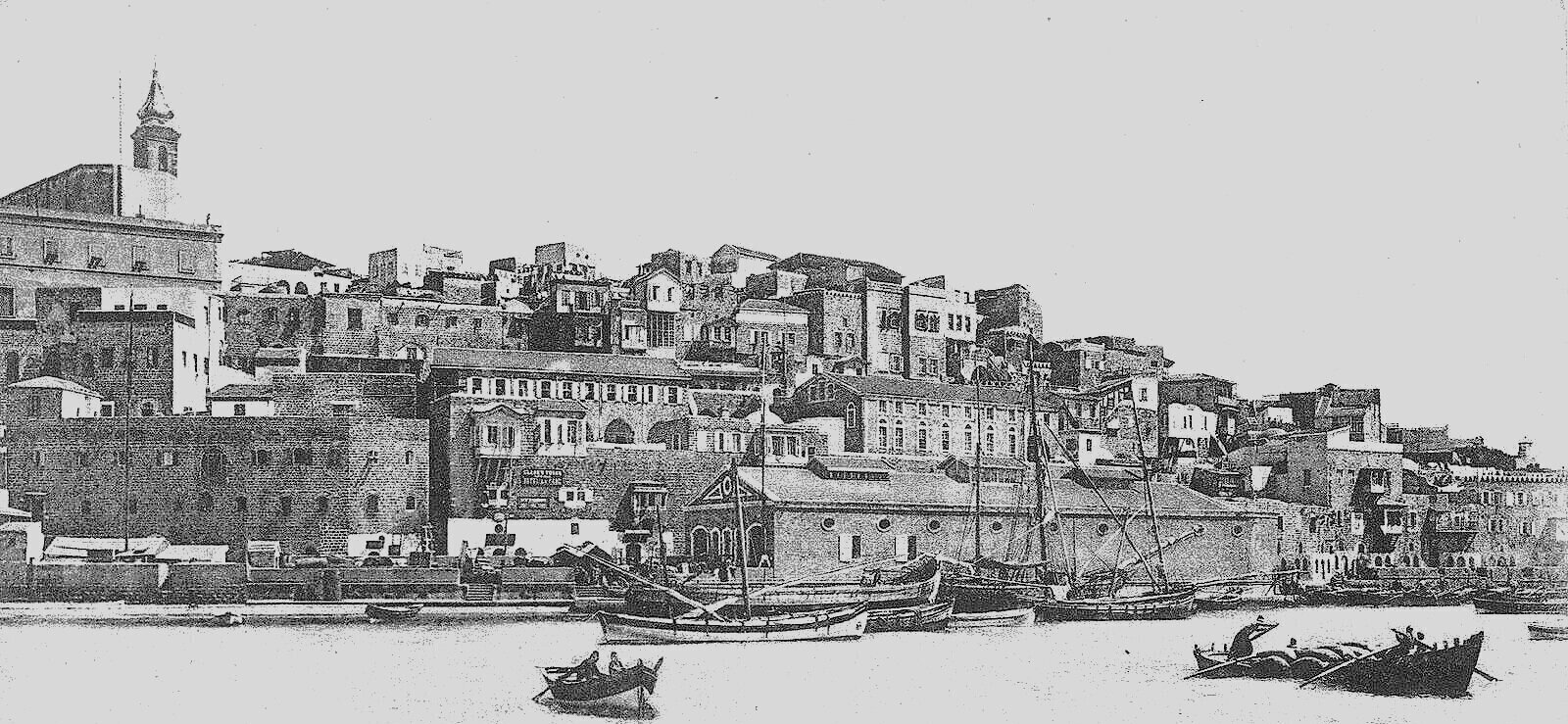
SeaPort was founded in Jaffa in 2018 by artist Dor Guez Munayer and relocated to Athens in 2025. Its development is closely connected to Guez Munayer’s artistic practice, which draws on Palestinian and Jewish family histories to examine how knowledge, memory, and identity are preserved, transmitted, and reinterpreted across communities and generations. These concerns continue to inform SeaPort’s institutional approach, shaping its commitment to curatorial research, hospitality, and the circulation of knowledge across cultural and geographic boundaries.
Through research, hospitality, and sustained dialogue, SeaPort seeks to build relationships that continue beyond individual residencies, connecting people, practices, and institutions across the Mediterranean and beyond.
Stay updated on SeaPort residencies, events, and public programs. Subscribe or contact us.